
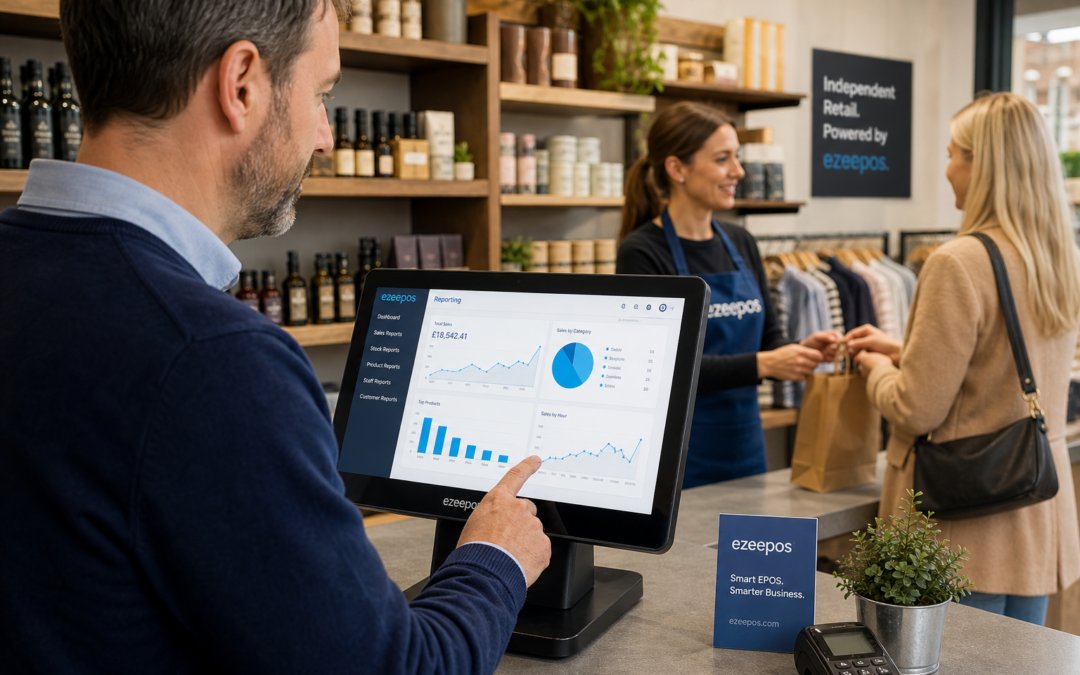
Why reporting matters in an independent shop
Running an independent shop means making a constant stream of decisions: what to reorder, when to schedule staff, which products to promote and where time is being lost at the till. Good reporting helps you answer those questions with real data instead of guesswork.
For many UK retailers, the challenge is not a lack of information. It is having the right information in a clear enough format to act on. That is where a modern retail EPOS system can make a real difference. With eZeePOS, shop owners can use sales data more effectively and build a clearer picture of how the business is performing day to day.
What useful EPOS reports can show you
Reporting is most valuable when it gives you simple, practical answers. Even a small shop can benefit from a few well-structured reports that highlight the patterns behind daily trade.
Sales by day, week or month
These reports help you see whether trade is steady or seasonal. They can also show whether certain days consistently outperform others, which is useful when planning staffing, opening hours and promotions.
Best-selling products
Knowing which items sell well is only part of the picture. The more helpful question is why they sell well. Is it price, placement, popularity or repeat demand? When you understand that pattern, you can stock and display products more effectively.
Busiest trading periods
Independent shops often have bursts of activity that are easy to miss when the day is busy. EPOS reporting can help identify the times when queues build, sales peak or staff are stretched. That makes rota planning much more practical.
Transaction value and basket spend
Average transaction value can help you understand whether customers are buying a single item or adding extras. For retailers, that can highlight opportunities for add-on sales, bundle offers and better product placement near the till.
How reporting helps day-to-day decisions
Many shop owners are already making sensible decisions instinctively. The benefit of EPOS reporting is that it confirms what is working and highlights what may need to change. That can save time, reduce waste and support more confident planning.
Stocking the right products
Although this article is not about stock control, sales reports still help with buying decisions. If a product line is consistently slow, it may not deserve as much shelf space. If another line sells quickly on certain days, you can plan ahead more accurately.
Planning staff hours
Small shops often need to balance customer service with tight labour costs. Reporting can show when the shop is quiet and when the till is under pressure. That helps business owners avoid overstaffing slow periods and understaffing busy ones.
Choosing better promotions
Promotions can work well in independent retail, but only when they are timed and targeted properly. Sales reporting can show which offers bring in extra trade and which simply reduce margin without improving basket value.
Spotting changes in customer behaviour
Consumer habits can shift quickly, especially in convenience stores, gift shops, farm shops and fashion retailers. If you review reports regularly, it becomes easier to notice a drop in a category before it turns into a bigger issue.
Reporting is especially useful for busy independent retailers
Some businesses see reporting as something to check once a week. In reality, it is most useful when it forms part of an everyday routine. A quick look at the right report can help you prepare for the next trading day, not just review the previous one.
This is particularly helpful for:
- Convenience stores that need to react quickly to changing demand
- Gift shops that rely on seasonal trade and impulse buying
- Fashion and clothing shops that need a better view of popular lines and sizes
- Farm shops and pet shops with mixed product ranges
- Pop-up shops and mobile retail businesses that need clear performance data quickly
Making reports easier to use
Reports are only useful if they are easy to read. A well-designed EPOS system should present information clearly enough for busy owners and managers to use without having to dig through spreadsheets or manual notes.
Keep the number of reports manageable
It is better to use a few reliable reports well than to track too many figures that never get reviewed. Start with the sales and busiest-period reports, then build from there.
Review trends, not just totals
A single day can be misleading. Looking at trends over time is more useful, especially if your business is affected by weather, school holidays, local events or payday patterns.
Share information with the team
If staff understand which products are important or which times are busiest, they can support the business more effectively. Reporting becomes more useful when it feeds into real decisions on the shop floor.
Using EPOS reporting alongside other tools
Reporting works best when it is part of a wider EPOS setup that supports daily operations. That might include barcode scanning, touchscreen tills, product lookup and customer-facing workflows that keep the checkout moving smoothly.
For some businesses, the value is also in linking sales information with broader trade decisions. A useful dashboard can help owners compare branches, monitor seasonal patterns and keep a closer eye on day-to-day performance without relying on memory or manual counts.
Why independent shops should look at reporting now
Independent retailers do not always have the time or headroom for complicated systems. That is why practical reporting matters. It should help you make quicker decisions, not create more admin.
With the right retail EPOS setup, reporting can become a simple habit that supports better planning, better stock decisions and a more confident approach to trading. For many UK shops, that makes a noticeable difference.
If you are reviewing your current till setup or looking for a more practical English-language EPOS system for your shop, take a look at eZeePOS and see how it can support your business operations.
Contact YCR Distribution at sales@ezeepos.co.uk or call 01924 438238.
To learn more, visit www.ezeepos.co.uk.
Recent Comments