
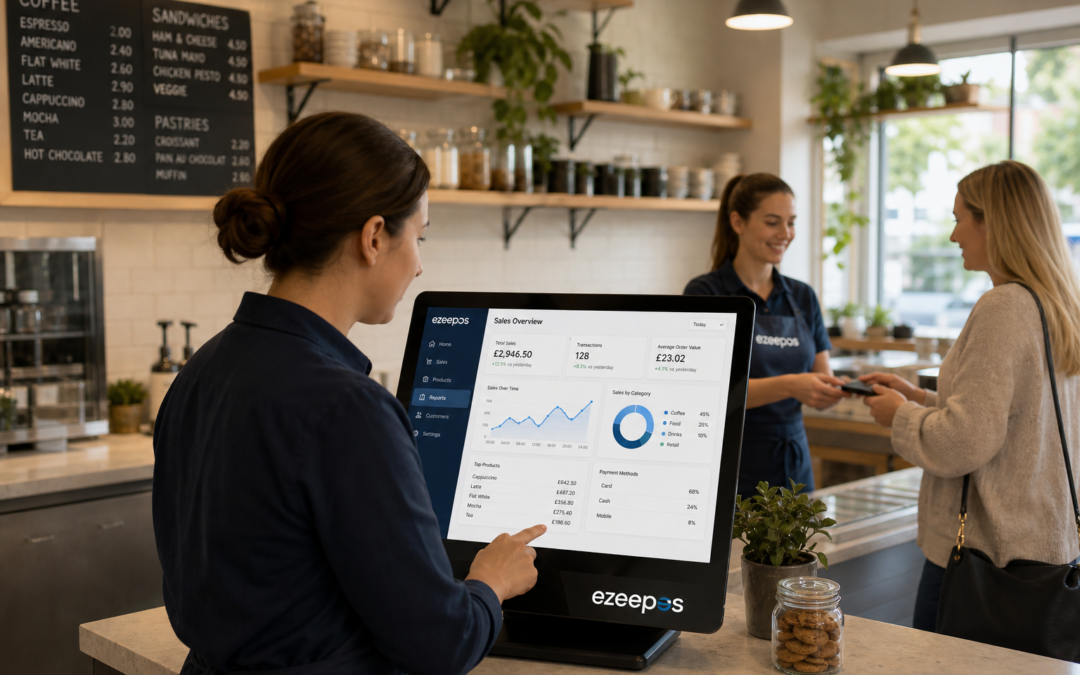
If you run a busy shop, cafe, restaurant or takeaway, it is easy to focus only on serving customers and keeping the till moving. But the numbers in your EPOS system can tell you much more than today’s takings. With the right reports, you can see what is selling, when trade is strongest and where small changes could make a real difference.
That is one reason many independent businesses look at eZeePOS as a practical UK EPOS option. It is not just about processing sales. It is about helping owners and managers understand what is happening in the business, without making day-to-day work more complicated.
Why EPOS reporting matters for independent businesses
For smaller retail and hospitality businesses, reporting often needs to be simple, clear and useful. You may not have time to dig through spreadsheets or wait until month end to find out what went well. Good EPOS reporting can give you a more immediate picture of trading patterns.
That can help with decisions such as:
- which products or menu items are proving most popular
- what times of day are busiest
- how trade changes across the week
- which locations, counters or departments are performing best
- whether promotions appear to be working
Instead of relying on memory or guesswork, you can use real sales information from the till. For many business owners, that makes planning feel calmer and more informed.
Reporting that supports day-to-day decisions
The best EPOS reports are the ones you actually use. A long list of charts and figures can be useful, but only if the information is easy to understand. For many UK businesses, the most valuable reports are the ones that answer simple questions quickly.
Sales trends
Sales reports can show whether the business is growing, flat or under pressure. They can also help you compare different days, weeks or trading periods. For example, a cafe may notice that Tuesday mornings are stronger than expected, while a shop may see a clear pattern in lunchtime sales.
Peak trading times
Knowing when you are busiest helps with staffing, stock preparation and customer service. If Friday afternoons are consistently busy, you can arrange better cover and reduce the risk of long queues or rushed service. In hospitality, that can make service feel smoother for both staff and customers.
Best-selling items
Product and category reports can highlight what customers are buying most often. That information can help retailers decide what to feature more prominently, while cafes and restaurants can identify popular dishes or drinks that deserve a place in the spotlight.
Performance by department or section
For shops with different sections, or hospitality venues with separate counters, reporting can make it easier to see which areas are performing well. That is especially helpful in multi-department retail, garden centres or businesses that operate across more than one sales area.
What owners can learn from simple report checks
You do not need to be a data expert to get value from EPOS reporting. A short daily or weekly review can often reveal useful patterns. For example:
- Are certain days consistently slower?
- Do particular products sell better at certain times?
- Are promotion periods increasing trade or just discounting sales?
- Are staff members following the same selling patterns?
- Is the business busier than expected at specific times of year?
These insights can support better staffing, ordering, merchandising and promotion planning. They can also help if you are trying to reduce waste, improve service speed or make the most of limited counter space and staffing hours.
Retail and hospitality use reporting differently
Although the principle is the same, the most useful reports can differ depending on the type of business.
For retailers
Shops often use reporting to understand product performance, seasonal changes and customer buying habits. A gift shop may want to know which product categories sell best at weekends, while a hardware store may want to compare strong lines against slower movers. The aim is to make buying, display and staffing decisions with more confidence.
For cafes, restaurants and takeaways
In hospitality, reporting is often closely linked to service times, busy periods and menu popularity. A takeaway may use sales patterns to prepare better for the evening rush. A restaurant may look at table turnover and peak times to help with shift planning. A cafe may also use reports to understand which drinks or snacks drive repeat visits.
How to make reporting actually useful
Reporting is most valuable when it becomes part of the routine rather than something checked only once in a while. A few simple habits can make a big difference:
- review key reports at the same time each day or week
- focus on a small number of figures that matter most to your business
- compare current trade with the previous week or same period last year
- use the information to make one practical change at a time
It also helps when reports are easy to read on a touchscreen till or back-office screen. If the information is clear, staff are more likely to use it and owners are more likely to act on it.
Why a practical EPOS system matters
A good reporting set-up should not feel separate from the rest of the till system. It should sit naturally alongside sales, product search, staff use and day-to-day trading. That is where a practical UK EPOS solution like eZeePOS can be helpful: it supports the jobs businesses need to do while also giving them the insight to plan ahead.
For some businesses, that might mean keeping an eye on trade patterns before the busy season. For others, it may be about understanding which lines deserve more attention, or which trading periods need better staff cover. The point is not to create more work. It is to make the business easier to run.
Using reporting to improve the next decision
The real value of EPOS reporting is not in the figures themselves. It is in what you do next. If a report shows that afternoons are busy, you can prepare staff earlier. If a product range consistently underperforms, you can rethink how it is displayed or sold. If a promotion works well, you can plan a better version for next time.
For independent businesses, small changes often matter most. Better reporting helps you make those changes with more confidence and less guesswork.
To see how eZeePOS can support clearer reporting for your retail or hospitality business, visit www.ezeepos.co.uk.
Contact YCR Distribution at sales@ezeepos.co.uk or call 01924 438238.
Recent Comments