
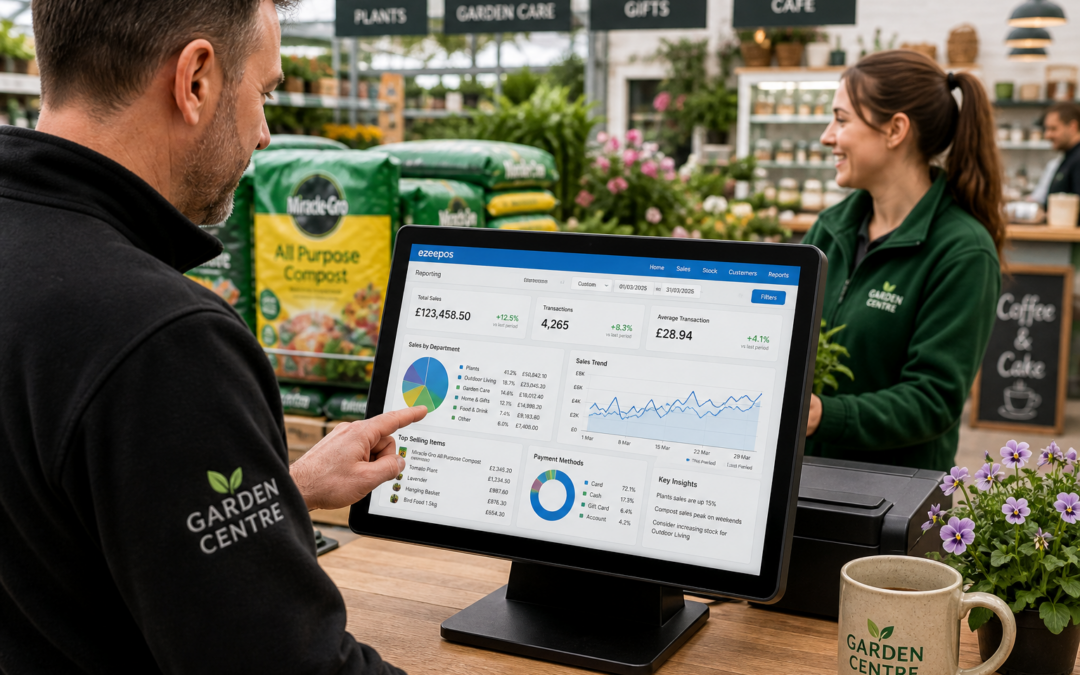
Garden centres are rarely simple retail businesses. Many sell plants, compost, garden furniture, tools, gifts, seasonal decorations and sometimes café items too. That mix can make trading patterns harder to read at a glance. This is where eZeePOS and clear reporting tools can make a practical difference.
For many independent garden centres, the goal is not more data for the sake of it. The goal is better decisions: which lines deserve more attention, when staff are needed most, and which areas of the business are driving sales at different times of year. Good EPOS reporting helps turn everyday transactions into something useful.
Why garden centres need more than a sales total
A single end-of-day total may tell you how much was taken, but it does not explain what happened during trading. Garden centres often have a broad mix of products and customer needs, so simple totals can hide important patterns.
For example, a sunny weekend might bring more plant sales, while a cold spell may shift demand towards indoor items, gifts or café purchases. Seasonal changes can affect footfall, basket size and staffing needs. With the right reporting view, owners can spot those shifts earlier instead of relying on instinct alone.
Useful questions reporting can answer
- Which product types are selling best this week?
- What are the busiest times of day or days of the week?
- Which departments are performing well together?
- How do seasonal changes affect sales?
- Are café and retail sales moving in the same direction?
Understanding performance across different departments
Many garden centres are really a collection of mini businesses under one roof. There may be a plant area, home and gift retail, outdoor furniture, seasonal displays and food or drink service. Reporting is most useful when it helps you compare those areas clearly.
EPOS reports can help identify which department is growing, which needs more promotion and where demand is strongest. That matters when planning staffing, ordering stock, arranging displays or deciding where to focus marketing.
If one area is performing well but another is underused, it may point to a layout issue, a timing issue or a simple opportunity to improve the customer journey. For busy sites, those small adjustments can make a real difference over time.
Using sales patterns to plan staffing and service
Garden centres often see peaks that are easy to predict in broad terms, but harder to manage day to day. Weekends, bank holidays, sunny afternoons and seasonal gifting periods can all affect customer flow. EPOS reporting can show when those peaks actually happen.
This helps managers schedule staff more accurately. Rather than overstaffing quiet periods or leaving the till area short-handed at busy times, reporting gives a clearer picture of what trading really looks like. That can improve service at the counter, reduce queue pressure and make day-to-day planning less stressful.
It can also help café areas if your garden centre includes food service. A busy plant department does not always mean the café is busy at the same time, and the reports may show different patterns that are worth staffing separately.
Spotting seasonal trends earlier
Seasonality is part of life for garden centres. Spring planting, summer outdoor living, autumn tidy-up products and Christmas ranges all create different sales peaks. Good reporting helps you see which periods are gaining momentum and which products are fading sooner than expected.
Instead of waiting until the end of a season to review performance, owners can check reports during trading and adjust displays, promotions or staffing while there is still time to act. That is especially useful when conditions change quickly, such as during a wet spring or an unusually warm autumn.
Examples of seasonal reporting insight
- Plant sales rising earlier than last year
- Gift purchases increasing in wet-weather periods
- Outdoor furniture sales concentrated around weekends
- Café sales rising when footfall is high in the plant area
Making product mixes easier to understand
Garden centres often carry many different lines, and not every item performs in the same way. Reporting can help identify products that sell steadily versus those that depend on weather, events or the time of year.
That information can help with display planning and merchandising. For example, if certain product groups sell well together, they may deserve to be placed closer together. If some items attract attention but do not convert into sales, that is useful too. It may mean the product needs a better price point, a clearer display or a more suitable location.
The point is not to micro-manage every sale. It is to give owners a clearer view so they can make practical decisions without relying on guesswork.
How eZeePOS supports better decisions
A modern EPOS system should make reporting easier to use, not harder. With eZeePOS, garden centre teams can review sales data in a more structured way and use it to support everyday decisions. That can be especially helpful for independent businesses that need a practical system rather than something overly complex.
Whether you are looking at busy periods, department performance or seasonal trends, the aim is the same: get a clearer picture of the business and act on it with confidence. For garden centres, that can mean better planning, smoother service and stronger day-to-day control.
It also helps connect the retail floor with the wider business. Managers are not just seeing transactions; they are seeing patterns that can inform staffing, displays, promotions and customer experience.
Choosing reporting that works for your team
Not every business needs the same type of report. Some owners want a quick daily summary, while others need more detail by department or category. The best EPOS setup is one that gives useful information without creating admin overload.
For a garden centre, that usually means reports that are easy to read, easy to compare and relevant to the way the business actually trades. If the data is straightforward, staff are more likely to use it and managers are more likely to act on it.
That is where a practical system like eZeePOS can help. It is designed for independent UK retail and hospitality businesses that want to keep service moving while still making better decisions behind the scenes.
A practical next step for garden centres
If your garden centre is growing, changing or simply becoming harder to manage from memory alone, reporting may be one of the most useful areas to improve first. The right EPOS setup can help you understand what is selling, what is busy and where your team should focus next.
To find out more about how eZeePOS could support your garden centre, visit www.ezeepos.co.uk.
Contact YCR Distribution at sales@ezeepos.co.uk or call 01924 438238.
Recent Comments