
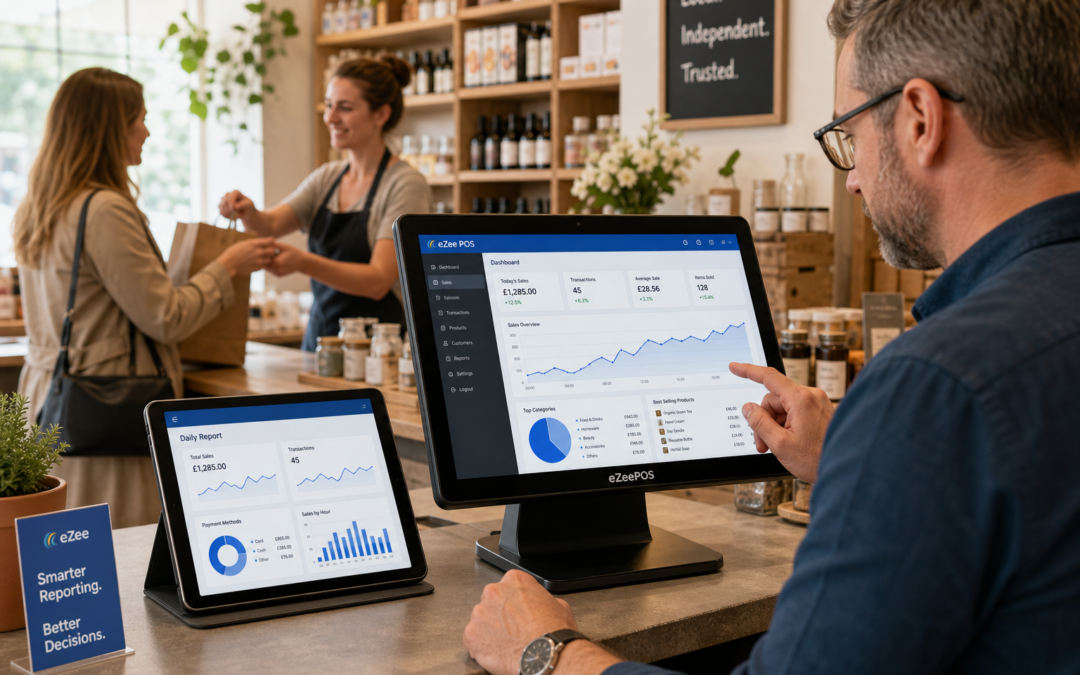
For many independent shops, the challenge is not a lack of data. It is knowing which numbers actually help with day-to-day decisions. A good EPOS reporting setup can turn routine sales activity into clear, practical insight for owners and managers who need to keep trading moving without unnecessary admin.
On www.ezeepos.co.uk, eZeePOS is positioned as a practical UK EPOS option for retail and hospitality businesses that want a clearer picture of what is happening across the counter. Rather than relying on guesswork, reporting can help you see what is selling, when customers are busiest and where small changes could make a real difference.
Why reporting matters in a busy shop
Small retailers often make dozens of decisions every week without thinking of them as formal planning. Should staffing be adjusted for a certain day? Is one product line performing better than expected? Are slower hours being used well? Reporting helps answer those questions using real trading information instead of memory alone.
That matters because busy owners do not always have time to dig through spreadsheets or paper records. A well-set-up POS system can provide straightforward sales summaries that are easy to review at the end of the day, week or month. For shops that need to stay flexible, that kind of speed is valuable.
Common reporting questions small shops can answer
- Which days and times are busiest?
- What are the best-selling products or categories?
- How do sales compare between different periods?
- Are there products that sell well together?
- Which lines may need more attention on the shop floor?
Those answers can support better planning without making the business feel overcomplicated.
Turning sales totals into useful insight
Total sales alone do not tell the full story. A shop might have a strong weekend but slower Mondays, or steady footfall with one category outperforming the rest. EPOS reporting helps owners look beyond the headline number and understand the shape of trade.
For example, if a convenience store sees a regular rise in sales during certain evening hours, that may help with staffing decisions. If a gift shop notices that a few product types account for most of the revenue, that can guide merchandising and displays. If a farm shop has strong sales in food-to-go during lunch hours, it may help identify when service needs to be fastest.
This kind of insight does not replace experience, but it strengthens it. More informed decisions are usually less risky than assumptions.
Useful report types for independent retailers
The exact reports a business needs will depend on the shop type, but a few are especially useful for day-to-day management.
Sales summaries
These give a clear view of overall trade and help owners see whether performance is improving, holding steady or dipping. They are useful when reviewing the day quickly before closing or checking results after a busy period.
Product and category reports
These show which items or groups of items are selling best. For shops with a broad range of products, this can be useful for understanding customer buying patterns without needing to inspect every line manually.
Time-based reports
Knowing when trade peaks can help with rota planning and customer service. If the business is consistently busiest at specific times, staff can be better prepared to keep queues moving and keep the counter organised.
Comparison reports
Comparing this week with last week, or this month with the same period last year, can help identify whether changes are seasonal or part of a longer trend. That is especially helpful for businesses with irregular footfall.
How reporting supports better planning
One of the biggest advantages of reporting is that it helps businesses plan ahead with more confidence. A shop owner who can see patterns early is in a stronger position to prepare staff, respond to demand and allocate time where it matters most.
For example, if a small retailer sees a recurring midweek lull, that may be a better time to review displays, reorganise the counter or complete admin tasks. If trade spikes before a local event or school holiday, the business can prepare earlier rather than reacting late.
Reporting can also help managers spot small issues before they become bigger ones. A sudden drop in a product category, or a change in average sales across similar days, may be worth investigating. It is not about chasing every number. It is about noticing what matters.
Why simple reporting is often the most useful
Many independent businesses do not need complex dashboards with endless filters. They need reports that are straightforward, readable and quick to use. That is where a practical EPOS system makes a difference.
Simple reporting is easier to build into the rhythm of the business. Staff can review end-of-day figures without delay. Owners can compare performance without exporting complicated files. Managers can use the information in meetings, rota planning and purchasing discussions.
In retail, speed and clarity often matter more than volume of data. The best reporting tools are the ones that help people make decisions without slowing the business down.
Reporting for retail and hospitality businesses
Although this article focuses on small shops, the same principle applies across retail and hospitality. Cafés, takeaways and restaurants can all benefit from seeing what sells, when service is busiest and where the main trading patterns appear. For mixed businesses, a single system can make it easier to compare the different parts of the operation.
If you are considering a new EPOS setup, it is worth thinking about reporting early rather than as an afterthought. The reports you use most often are usually the same ones that make daily management easier.
Choosing EPOS software that helps you stay in control
Good reporting should feel helpful, not overwhelming. The right software should give independent business owners the information they need in a clear, practical format. That is one reason many UK businesses look for systems that combine everyday till functions with easy-to-read reports.
At eZeePOS, the aim is to support businesses that want a modern EPOS setup with useful reporting built into day-to-day trading. If you are comparing options for a shop, café or other local business, it is worth looking at how simply the system presents sales information and how easy it is to review at the end of a busy shift.
To find out more, visit www.ezeepos.co.uk and explore a UK EPOS solution designed with independent businesses in mind.
Contact YCR Distribution at sales@ezeepos.co.uk or call 01924 438238.
Recent Comments