
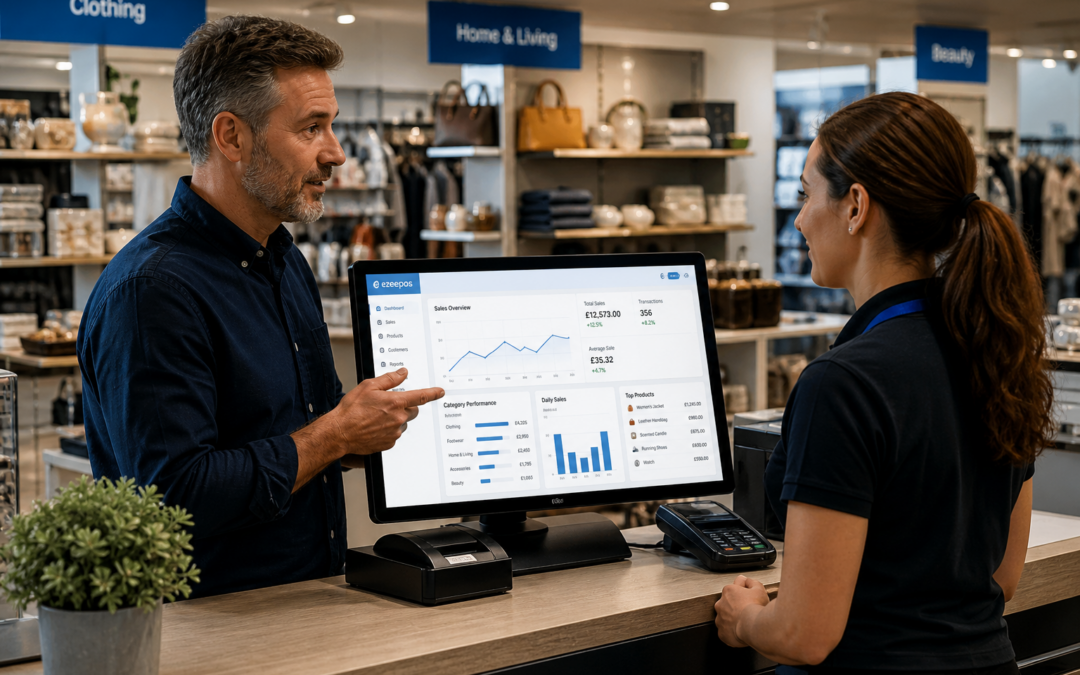
Multi-department retail businesses often have more moving parts than a single-section shop. A store that sells clothing, gifts, homeware, seasonal items or food products needs a clearer view of what is working in each area, not just a single end-of-day total.
That is where good eZeePOS reporting can make a real difference. Rather than relying on guesswork, owners and managers can use sales data to understand trade patterns, compare departments and make calmer day-to-day decisions. For UK retailers, that can mean fewer surprises and a better grip on what is happening across the business.
Why multi-department retail needs better reporting
When a shop has more than one department, performance can vary widely from one area to another. A gift section may be strong at weekends, clothing may sell steadily through the week and seasonal stock may surge at certain times of year. Without clear reporting, it is easy to focus too much on the busiest section and miss what is happening elsewhere.
EPOS reporting helps bring those patterns into view. Instead of looking at sales as one overall number, you can see how different product groups, departments or pricing bands are performing. That gives you a more practical basis for decisions about staffing, promotions and display space.
What useful retail reports can show you
Different businesses will want to track different things, but there are a few reports that are especially useful in a multi-department setting.
Department performance
A department report can show which areas of the shop are generating the most sales. This is useful when deciding where to place staff, which sections need more attention and where your strongest trading is coming from.
Sales by time and day
Understanding when your shop is busiest can help with rota planning and customer service. If certain departments are busier at particular times, you can plan displays, stock replenishment and staffing more effectively.
Product and category trends
Category-level reporting can highlight which product ranges are moving well and which ones may need a different approach. That insight is especially helpful when a shop carries a wide mix of items and some lines need more visibility than others.
Refunds, discounts and returns
Reporting can also show how often discounts and refunds are being used. In a busy retail environment, that information helps owners spot issues early and keep a close eye on trading quality rather than simply volume.
How reporting supports day-to-day retail decisions
Good reports are not just for month-end reviews. They can help with everyday choices that affect how smoothly the shop runs.
For example, if one department is consistently outperforming the others, you may want to give it better display space or more frequent replenishment. If another section is underperforming, reports can help you decide whether the issue is product mix, price point, merchandising or visibility.
Reporting also helps with practical management tasks. You can use it to plan staff coverage, review promotion results and see whether a seasonal display is delivering the results you expected. In a multi-department store, those may sound like small gains, but they can add up to a better organised business.
Using reports without creating extra admin
One of the advantages of a modern EPOS system is that reporting does not need to be complicated. The aim is to make information easier to use, not harder to access. With clear dashboards and simple summaries, managers can check the numbers they need without spending ages pulling together figures manually.
That matters for independent retailers, where time is limited and owners often handle several roles at once. A practical reporting setup should save time, reduce uncertainty and make it easier to act quickly when trading patterns change.
Why this matters for seasonal and mixed retail businesses
Multi-department shops often face shifting demand across the year. A garden centre may see very different sales patterns from one month to the next. A gift shop may rely on events, holidays and tourist trade. A larger general retail store may need to balance regular core sales with seasonal ranges.
Reporting helps these businesses understand how different areas contribute at different times. That makes it easier to stock smarter, plan offers and decide where to focus attention during busy periods. It is especially useful when the business has a mix of fast-moving and slower-moving departments.
How eZeePOS can help retailers use reporting more effectively
eZeePOS is designed to support practical retail operations, including businesses that need a better view across multiple departments. For many owners, the value is not in having more data for its own sake, but in having the right figures available when decisions need to be made.
If you are comparing EPOS options, it is worth looking at how reporting is presented, how easy it is to check by department and whether the system suits the way your shop actually trades. A straightforward reporting setup can make a noticeable difference to retail management without adding complexity at the till.
To learn more about eZeePOS and how it supports UK retail businesses, visit www.ezeepos.co.uk.
Contact YCR Distribution at sales@ezeepos.co.uk or call 01924 438238.
If your business sells across more than one department, better reporting can help you stay organised, respond faster and make decisions with more confidence.
Recent Comments