
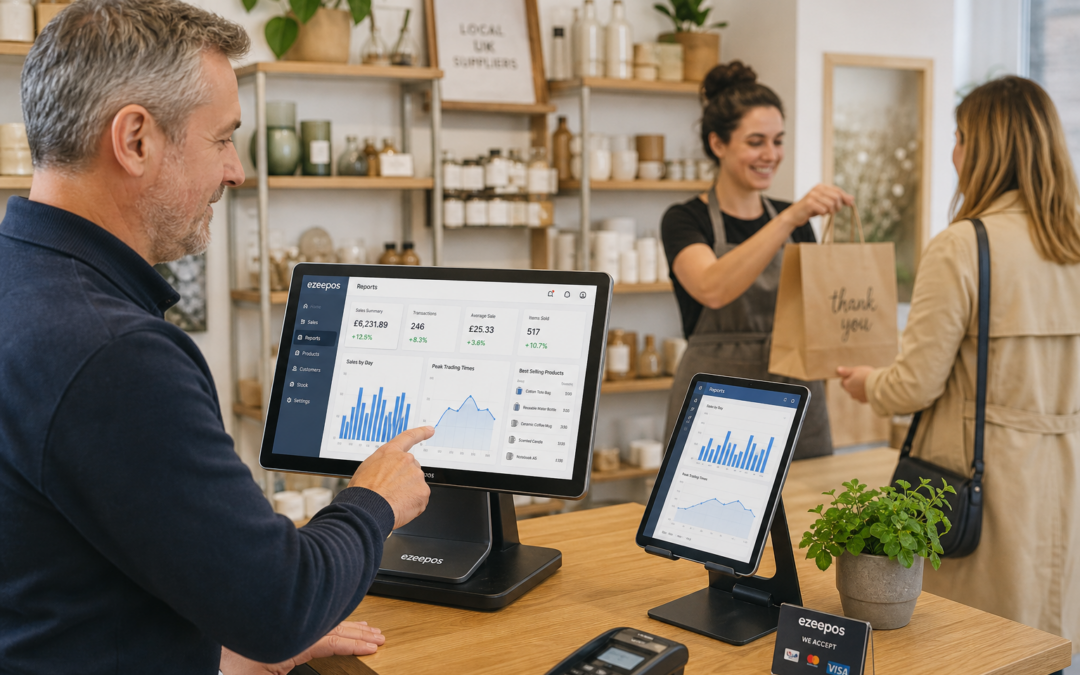
Why retail reports matter more than a day-end total
For many independent retailers, the till is used all day but the real value often comes after the customer has left. Modern EPOS reporting can turn everyday sales into practical information that helps you make better decisions about staffing, sales trends and trading patterns.
If you are relying on a basic till or a manual end-of-day count, it is easy to miss useful signals. A better reporting setup can show you what is selling well, when your busiest periods happen and which products or departments need more attention. That is one reason many shop owners look at eZeePOS as a practical UK EPOS option for day-to-day retail management.
What good retail reporting can show you
Good reporting does not need to be complicated. In a small shop, the most useful reports are often the simplest ones, as long as they are easy to understand and quick to check.
Sales by day and time
Knowing when trade is strongest helps you plan rota patterns more sensibly. A shop that is busy before work, over lunch or on Friday afternoons may need different cover at different times. Sales timing can also show when you are most likely to need a second person on the till.
Best-selling products and categories
It is useful to see which items are consistently popular and which ones only spike at certain times of year. This can guide ordering, shelf space and promotions. It can also help you decide whether a product deserves a better position in the shop or a stronger place in seasonal displays.
Busy periods and quiet periods
Understanding your quieter periods can be just as useful as knowing your peaks. If trade drops away at certain times, you may be able to use that time for replenishment, display changes, admin or staff training rather than keeping everyone tied to the counter.
Transaction trends over time
Daily reports are helpful, but weekly and monthly summaries give you a clearer view of what is changing. They can make it easier to spot a slow shift in customer behaviour before it becomes a bigger issue.
How reporting helps with staffing and rota planning
Staffing is one of the biggest day-to-day decisions in retail. Too few people on the shop floor can lead to queues, missed sales and a poor customer experience. Too many people on shift can add unnecessary cost.
EPOS reports help you build rotas around actual trading patterns rather than guesswork. If your reports show regular peaks on Saturday mornings or after school, you can plan cover more confidently. If certain weekdays are consistently quieter, you can keep those shifts lighter while still maintaining a good service level.
This is especially useful for shops with small teams, where every hour matters and one well-timed extra person can make a noticeable difference.
Using reports to support smarter buying decisions
Retail buying often becomes more efficient when you can compare what sells quickly with what sits on the shelf. Reports can highlight items that deserve repeat orders and items that may need to be reduced, replaced or rethought.
For example, a gift shop might notice that certain lines sell well around holidays but slow down outside those windows. A convenience store might see that some products perform strongly at weekends but not during the week. A shop with a more varied offer can use that information to sharpen its buying decisions and reduce wasted effort.
That does not mean reports should replace commercial judgement. They should support it. The most useful EPOS data gives shop owners a clearer starting point for decisions they already need to make.
Why simpler reporting often works best
Many small retailers do not need a complicated system with dozens of dashboards. They need reports that are easy to find, easy to read and relevant to the way the business actually trades.
A practical EPOS setup should make it straightforward to view the figures that matter most without needing a lot of extra training. If a report takes too long to interpret, it is less likely to be used regularly. The best reporting tools are the ones that become part of the weekly routine rather than something left for month-end.
Keep reporting part of normal management
It helps to build a habit around checking reports. Some retailers review them at the start of the day, others at close, and some once a week before placing orders or planning rotas. The key point is consistency. Regular review makes it far easier to spot patterns and react early.
Reporting for shops with more than one area or department
If you run a multi-department retail business, reporting becomes even more valuable. When different product types are sold from the same counter, it helps to know which areas are contributing most to trade. That can support better use of floor space, customer flow and staff attention.
Even in a smaller shop, segmenting sales by category can help you understand more about your customers. You may discover that some lines are popular with repeat buyers while others are more dependent on seasonal footfall. That kind of information is useful when planning future ranges and promotions.
Making reporting useful without adding admin
The value of reporting is not just in the data itself. It is in how quickly you can act on it. A well-set-up EPOS system should reduce admin rather than create more of it. That means making data easier to access, easier to understand and easier to use in everyday decisions.
For busy independent retailers, that can be one of the biggest advantages of moving from a basic till to a modern retail EPOS system. Instead of working from instinct alone, you can back up your decisions with real trading information.
Choosing an EPOS system that supports better decisions
If you are comparing systems, it is worth looking beyond the headline features. Ask how reports are presented, how quickly they can be accessed and whether they actually match the way you run your shop. A good system should help you save time, reduce uncertainty and manage the business with more confidence.
eZeePOS is designed as a practical UK EPOS software option for retail businesses that want clearer day-to-day control without unnecessary complexity. If you want a system that can help you understand trading patterns and make better decisions, it is worth exploring what is available at www.ezeepos.co.uk.
Contact YCR Distribution at sales@ezeepos.co.uk or call 01924 438238.
Final thought
Retail reporting is at its best when it helps you act faster and with more confidence. Whether you are planning staffing, reviewing sales patterns or deciding what to reorder, the right EPOS reports can make day-to-day management simpler and more informed.
Recent Comments