
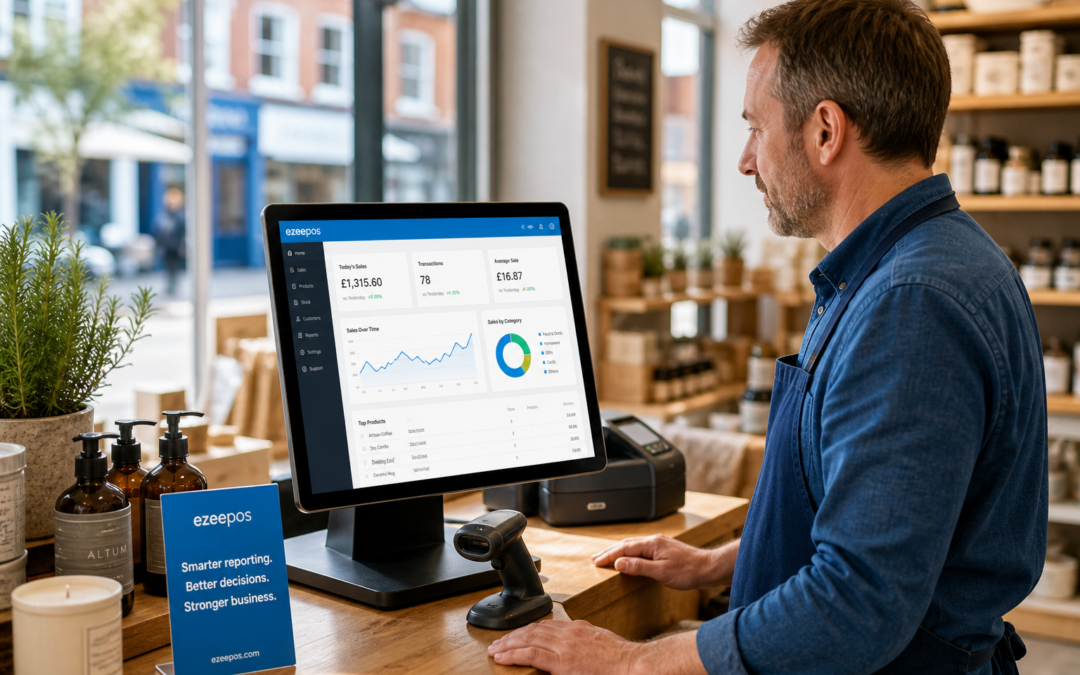
Good reporting is one of the most practical ways a small shop can get more value from its EPOS system. Instead of relying on guesswork at the end of a busy week, owners can look at sales patterns, peak trading times and product performance to make steadier day-to-day decisions. If you are reviewing your current setup, eZeePOS offers UK EPOS software designed to help retailers stay organised and informed.
Why reporting matters in a small shop
Independent retailers often have to make decisions quickly. Staff rotas, purchasing, promotions and opening hours all affect how smoothly the business runs. Clear EPOS reporting turns the transactions already going through the till into useful information that can support those choices.
For a small convenience store, gift shop, hardware store or pet shop, that might mean seeing which days are busiest, what time footfall rises, or which products are selling steadily rather than just occasionally. With that sort of insight, it becomes easier to plan ahead instead of reacting after a problem has already appeared.
From transaction data to practical action
Reports are only useful if they lead to something practical. The best EPOS reports for small retailers are the ones that help answer straightforward questions such as:
- Which days are strongest for sales?
- When does the shop need more staff on the counter?
- Which categories are growing or slowing down?
- Are certain items performing well at specific times of day?
- How do trading patterns change during seasonal periods?
Even a simple weekly review can reveal useful trends. A shop that sees a Friday afternoon spike may decide to schedule extra cover. A business with a strong lunchtime trade may rearrange displays or adjust opening routines to match customer behaviour.
The reports that matter most to small retailers
Not every report needs to be complicated. In fact, the most helpful EPOS reporting usually starts with a few clear views that are easy to read and act on. eZeePOS is designed to support retailers who want straightforward reporting without unnecessary complexity.
Sales by day and time
Knowing when the business is busiest helps with staffing and front-of-house planning. A small shop with one or two team members can use this information to avoid queues and make sure the counter is covered during peak periods.
Product and category trends
Sales by product or category can show what customers are choosing most often. That can help with product mix, merchandising and range planning. For example, a gift shop may notice that certain ranges sell better before weekends, while a pet shop may learn that some recurring purchases are more predictable than others.
Weekly and monthly comparisons
Comparing one trading period with another is often more helpful than looking at a single day in isolation. It can show whether a new display, price change or local event has had an impact. Monthly reports also make it easier to spot broader seasonal trends, especially for shops that trade heavily around holidays or school terms.
Helping with staffing and rotas
For small retail businesses, staff time is one of the biggest costs. Reporting can make rota planning more sensible by highlighting when the shop is quiet and when service pressure is likely to build. That can reduce unnecessary hours in slower periods and improve service when demand rises.
This is particularly useful for shops with limited cover, where the manager may also be serving customers, handling deliveries and dealing with admin. A clear picture of trading patterns helps the team plan around reality rather than assumptions.
Supporting better customer service
Reports do not just help managers. They can also improve the customer experience. If data shows that a shop is regularly busy at certain times, staff can prepare stock, tidy counters and make sure popular items are easy to find. That means less waiting and a smoother visit for the customer.
Making buying decisions with more confidence
Small retailers often have limited shelf space and cannot afford to overbuy. Reporting helps reduce that risk by showing what is moving and what is sitting still. That does not mean every buying choice can be reduced to a number, but it does mean the shop owner has a better starting point.
When used well, EPOS reports can support decisions about reordering, range changes and seasonal planning. They can also make conversations with suppliers more focused, because the business has real sales data to refer to rather than relying on memory alone.
Keeping reporting simple enough to use every week
One of the biggest barriers to useful reporting is complexity. If reports are hard to find or difficult to understand, people stop using them. A good retail EPOS system should make essential information easy to access and simple to interpret, so owners can review performance without spending hours on admin.
For many small shops, the goal is not to become a data-led business overnight. It is to build a habit of checking the numbers regularly enough to notice issues early and make better decisions with less stress.
When reporting becomes part of the routine
The real benefit of EPOS reporting comes when it becomes part of everyday management. A quick look at daily sales, a weekly review of busy periods and a monthly check on product trends can make a noticeable difference over time. Small changes based on clear information often add up to better service, smoother staffing and more confident planning.
If you want a retail EPOS setup that helps you stay organised and make informed decisions, explore www.ezeepos.co.uk to see how eZeePOS can support your shop with practical reporting tools and straightforward day-to-day use.
Contact YCR Distribution at sales@ezeepos.co.uk or call 01924 438238.
Recent Comments