
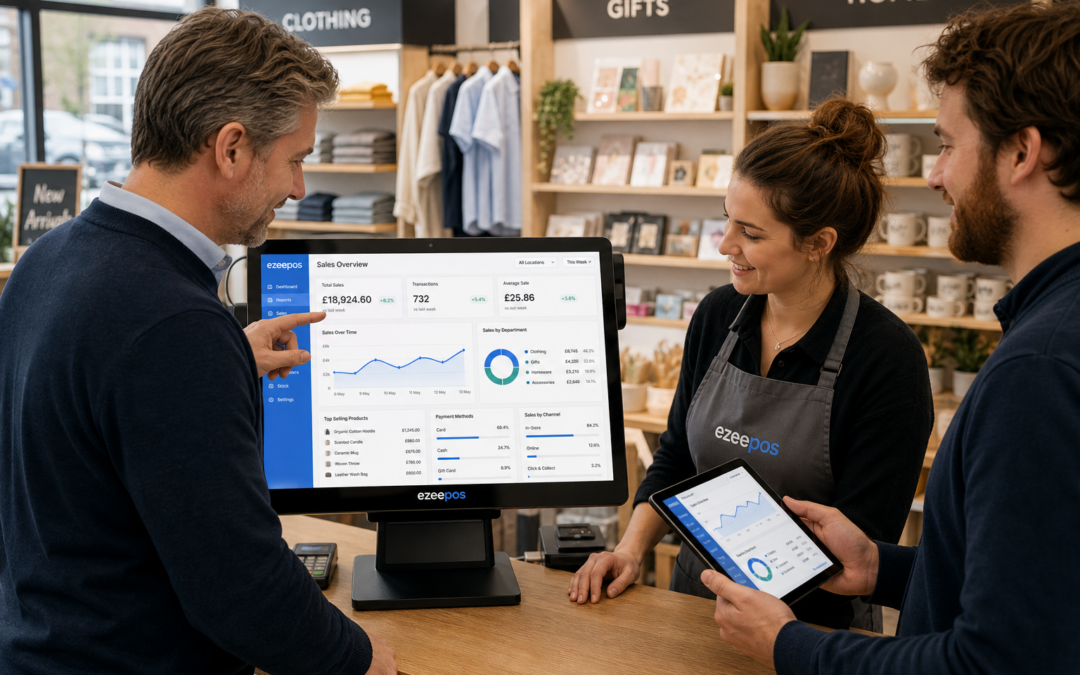
Multi-department retail can be rewarding, but it also brings more moving parts. A shop with separate areas for clothing, gifts, homeware, stationery or seasonal lines needs a clearer view of trading than a basic till summary can provide. This is where better reporting becomes valuable. With the right EPOS setup, business owners can see what is working, spot gaps sooner and make decisions based on real trading data rather than guesswork.
If you are looking at ways to improve day-to-day control in your business, eZeePOS offers a practical EPOS approach for UK retailers that need clearer information from the till. You can learn more at www.ezeepos.co.uk.
Why reporting matters in multi-department retail
When a business sells different types of products under one roof, it is easy for strong and weak areas to get blurred together. Overall sales might look healthy, but one department could be outperforming the others while another is quietly underperforming. Good reporting helps reveal these differences so that owners can act sooner.
This matters because each department may need a different approach. A gift shop area may trade well at weekends, while a stationery section might be more consistent through the week. Seasonal ranges may need a faster review cycle than core lines. Without usable reporting, these patterns are easy to miss.
What a useful retail report should show
Not every report has to be complicated. In many cases, the most helpful information is the simplest. A good EPOS reporting setup for multi-department retail should make it easy to see:
- Sales by department or product group
- Busy and quiet trading periods
- Best-selling items and slow movers
- Average transaction value
- Peak days and peak times
- Sales trends over weeks or months
When these figures are easy to access, managers can make practical changes without spending hours manually counting through records or spreadsheets.
Turning sales data into everyday decisions
The real value of reporting is not just seeing numbers on a screen. It is using those numbers to make better decisions. In a multi-department retail business, reporting can influence stock displays, staffing, promotions and even how the shop floor is arranged.
For example, if one department consistently performs better in the morning, staff can prioritise stock checks and customer service in that area during the early part of the day. If another section sees a spike in weekend sales, that may support a different rota or display plan. This kind of adjustment does not need to be complicated, but it does depend on having the right information available.
Spotting trends before they become problems
One of the most useful parts of EPOS reporting is the ability to spot change early. A product group may begin to slow down before it becomes obvious on the shop floor. A department may be doing well overall, but only because of a small number of strong sellers. Reporting can show whether a business is relying too heavily on a narrow range of products or a few busy trading periods.
That kind of visibility helps reduce wasted effort. Instead of making assumptions, the business can review what customers are actually buying and make informed changes to displays, ranges or staffing.
How EPOS reporting supports different retail departments
Multi-department retail businesses often need more flexibility than a single-category shop. EPOS reporting is useful because it can bring separate departments into one clear view while still allowing managers to look at them individually.
Clothing and fashion areas
Fashion departments often change quickly with seasons, sizes and trends. Reports can help identify which product types are selling well and which lines may need more attention. That makes it easier to respond to demand rather than holding onto old assumptions.
Gift, home and seasonal ranges
Gift items can be especially useful when presented clearly in reports. Seasonal lines may not need the same long-term review as core products, but they do need close monitoring while they are on sale. EPOS data can help managers see when a promotion is working and when stock is simply sitting still.
General department performance
For stores with several mixed product areas, report filters and category views can help compare performance without losing the bigger picture. That is particularly useful for independent retailers who need to use space carefully and make every department earn its place.
Making reports easier for staff to use
Reports are only helpful if staff can access and understand them. A well-designed EPOS system should present important information in a way that is simple enough for day-to-day use. That may mean clear dashboards, quick sales summaries or easy date-range filters.
When managers do not need specialist knowledge to read the data, reporting becomes part of normal business management rather than a task saved for month-end. That can lead to quicker decisions and less time spent chasing information from different sources.
Reducing the time spent on manual admin
Some retailers still rely on manual totals, paper notes or spreadsheet exports pulled from different systems. That can waste time and lead to inconsistent reporting. A good EPOS setup reduces this burden by keeping sales information in one place and making it easier to review whenever needed.
For busy business owners, that kind of simplicity matters. It means less time on admin and more time spent on customers, staff and trading decisions.
Why reporting is useful for multi-site or growing retailers too
Even if a business only has one location today, strong reporting can support future growth. The habits developed now can make it easier to manage another site later or compare different trading areas more effectively. For growth-minded retailers, reporting is not just about looking back at what happened. It is about building a business that is easier to manage as it expands.
Multi-department stores also benefit from consistency. When departments are measured in the same way, it is simpler to compare performance fairly and improve processes across the business.
Choosing EPOS reporting that fits real retail life
Not every retailer needs complex dashboards or advanced analytics. What matters most is that the reporting is relevant, easy to access and useful to the people making decisions. For many UK businesses, that means focusing on sales by department, product trends and straightforward summaries that support daily trading.
With eZeePOS, retail businesses can choose a practical EPOS solution that helps turn everyday sales into clearer decisions. If you run a multi-department shop and want to understand your trading better, visit www.ezeepos.co.uk to see how the system can support your business.
Contact YCR Distribution at sales@ezeepos.co.uk or call 01924 438238.
If you are planning your next EPOS upgrade, the right reporting tools can make a real difference to how confidently you run the business.
Recent Comments