
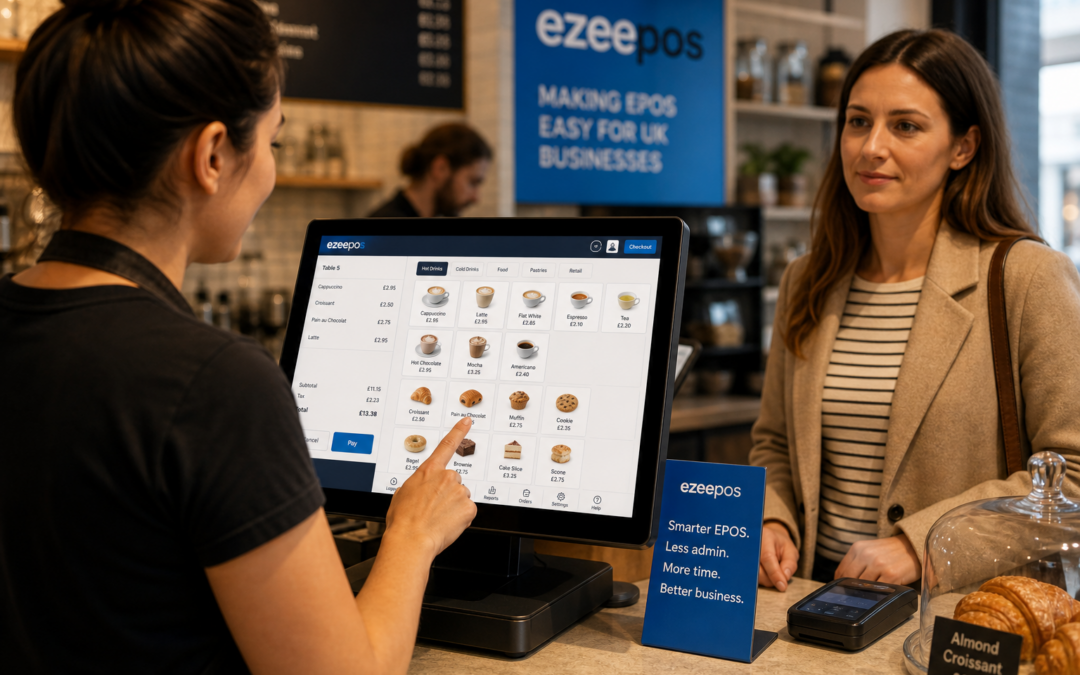
Why manual till errors still happen
Even in well-run businesses, small mistakes at the till can quickly add up. A missed modifier, an incorrect price, an item entered twice or a rushed refund can all affect the customer experience and create extra work for staff later in the day. For busy UK retailers, cafés, restaurants and takeaways, the problem is often not that staff are careless. It is usually that they are working fast, juggling customers and relying on a process that leaves too much room for manual entry.
This is where a more structured EPOS setup can make a real difference. With eZeePOS, businesses can reduce the amount of typing and tapping needed during each sale, which helps make everyday transactions clearer and more consistent. If you want to see how a practical EPOS system can support your day-to-day operations, take a look at www.ezeepos.co.uk.
What counts as a manual till error?
Manual errors are not limited to cash handling. They often happen when staff have to rely on memory, written notes or repeated screen entries to complete a sale. In practice, that can include:
- entering the wrong item or variant
- forgetting to apply a discount correctly
- typing in prices instead of selecting preset products
- adding the same item more than once
- mistyping a note for the kitchen or back office
- making mistakes when splitting payments or processing corrections
These problems may seem minor, but over a busy shift they can affect queue times, stock records, staff confidence and a business owner’s visibility of what has really been sold.
How smarter EPOS workflows reduce mistakes
A good EPOS workflow is not just about software style. It is about making the right action the easy action. When key items are easier to find, pricing is clearer and common tasks follow a simple pattern, staff are less likely to improvise under pressure.
1. Faster product selection
When items are organised properly on-screen, staff do not need to search through endless menus. This matters in retail shops with common product groups, as well as cafés and restaurants with popular menu items. A cleaner layout can reduce tapping around, prevent incorrect selections and help new staff settle in more quickly.
2. Clearer modifier and note handling
In hospitality settings, many errors happen when customer requests are passed on informally. Smarter EPOS workflows allow common modifiers, add-ons and notes to be entered in a consistent way. That helps keep the till, kitchen and front-of-house team aligned without relying on memory or handwritten slips.
3. Less repeated entry
Basic till processes often ask staff to enter the same information more than once. A better EPOS setup can reduce duplicate work by keeping product selection, pricing and receipt details linked together. That saves time and lowers the chance of mismatched totals or forgotten details.
4. Better control over discounts and corrections
Discounts should be straightforward, but they also need to be controlled. With sensible staff permissions and a clear process, businesses can reduce accidental over-discounting or unapproved changes. That is useful for independent retailers, cafés and restaurants that want consistency without making the till difficult to use.
Why this matters for independent retailers
For shops, the biggest benefit of reducing manual errors is often speed at the counter. If staff can scan, search or select the right item quickly, queues move more smoothly and customers are less likely to abandon a purchase. It also helps with trust. Customers notice when the till total is clear and accurate, especially when they are buying several items or using promotions.
Convenience stores, gift shops, fashion shops and farm shops can all benefit from a more connected till flow. Instead of relying on memory or a sequence of manual inputs, the team can work with a repeatable process. That makes training easier too, which is especially helpful when staff turnover is higher or seasonal workers are needed.
Why hospitality businesses see the biggest impact
In cafés, restaurants and takeaways, manual errors can affect more than just the receipt. They can disrupt the kitchen, delay service and create avoidable confusion during busy periods. A missed allergy note or an incorrectly entered menu item can mean rework for the team and inconvenience for the customer.
That is why hospitality businesses often need an EPOS system that supports order flow carefully. A sensible layout, clear prompts and consistent workflows can help staff take orders confidently at the counter or table. It also creates a better link between the front of house and the kitchen, which is important when service is moving quickly.
Staff training still plays a big part
Software can only do so much without good training. Even the best-designed till process needs staff to understand how to use it properly. Short, practical training sessions help new starters learn the correct steps from day one, while regular refreshers reduce bad habits that can creep in over time.
For businesses rolling out a new system, it helps to keep the workflow simple. Staff should know how to find products, apply common changes, correct mistakes and complete transactions without hesitation. That is often easier when the till system is designed around real trading conditions rather than a one-size-fits-all setup.
Where payment accuracy also helps
Manual payment entry can create another layer of risk, especially when businesses are under pressure to move quickly. While this article is mainly about reducing till errors, it is worth noting that payment speed and accuracy often go hand in hand. Where relevant, businesses may also wish to discuss payment integration options such as Teya and Dojo Payments with YCR Distribution, particularly if they are looking to reduce repeated entry and keep the checkout process more precise. The key is to choose a setup that suits the business, rather than adding complexity for its own sake.
A practical approach for UK businesses
If your current till process feels slow or depends too much on staff remembering each step, it may be time to review the workflow rather than just the hardware. A better EPOS setup can help reduce avoidable mistakes, improve service and make day-to-day trading feel calmer.
eZeePOS is a practical UK EPOS option for retailers and hospitality businesses that want clearer processes and more reliable till operation. It is designed to support real-world trading, not add unnecessary complications. Contact YCR Distribution at sales@ezeepos.co.uk or call 01924 438238.
Ready to reduce till errors?
If you are planning a new setup or reviewing an existing one, start by looking at the parts of your till process that depend most on manual entry. Then consider how a more structured EPOS workflow could help. You can learn more at www.ezeepos.co.uk.
Small changes at the till can make a real difference to service speed, accuracy and confidence across the business.
Recent Comments