
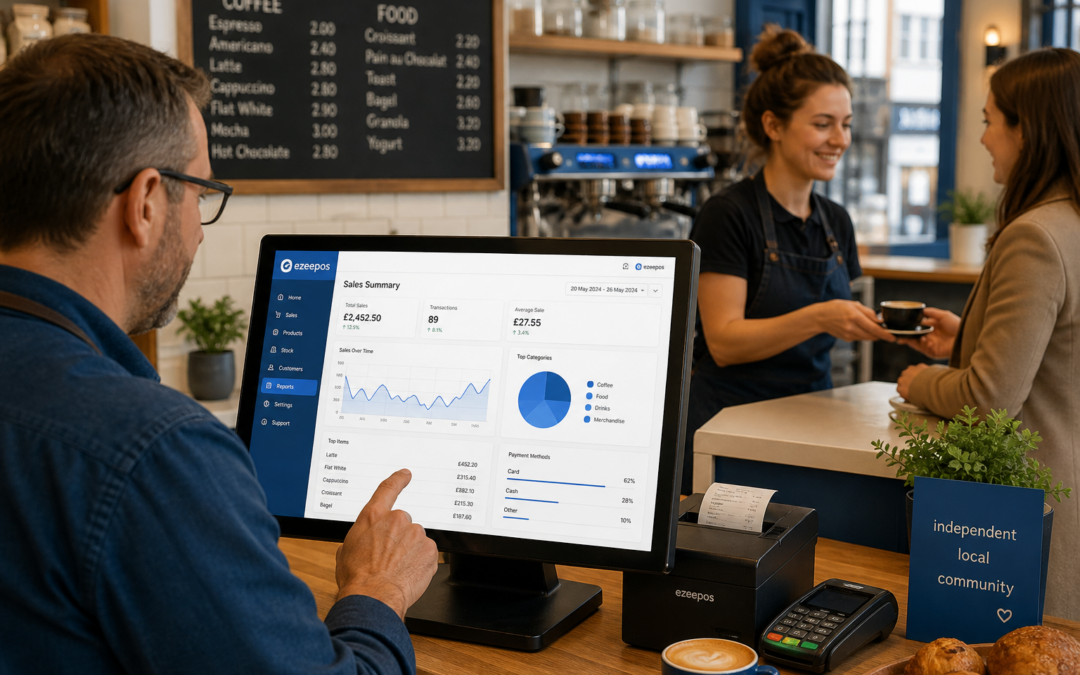
For many independent retailers and hospitality businesses, the biggest challenge is not collecting data – it is knowing what to do with it. A till can record every sale, but unless that information is easy to read and act on, it can be difficult to turn into useful decisions. That is where clear EPOS reporting comes in.
Whether you run a busy café, a local shop or a mixed retail business, the right reporting tools can help you understand what is selling, when trade is busiest and where small changes could improve day-to-day performance. If you want to explore how a practical EPOS setup can support that, take a look at eZeePOS at www.ezeepos.co.uk.
Why reporting matters for independent businesses
Independent businesses often rely on instinct, experience and customer feedback. Those things matter, but they are even more powerful when supported by clear sales information. EPOS reporting gives owners a more reliable view of what is happening across the business, without needing to spend hours counting receipts or pulling together figures manually.
Good reporting can help you answer simple but important questions:
- Which products or menu items sell best during the week?
- When are the busiest trading periods?
- Are certain areas of the business underperforming?
- Do sales change depending on the day, time or season?
That kind of visibility can help a business react sooner, rather than waiting until a problem becomes obvious.
Turning daily sales into practical insight
A useful EPOS report should not feel complicated. The best systems make it easier to spot trends quickly, so owners and managers can make sensible decisions without digging through spreadsheets or paper summaries.
Understand what is selling well
For a shop, this might mean seeing which product categories are strongest. For a café, it could mean identifying the most popular drinks, breakfasts or lunchtime items. Once you know what customers buy most often, you can plan stock, staffing and promotions more effectively.
Spot quiet periods and busy peaks
Trading patterns can vary a lot across the week. A café may be calm in the morning but busy at lunch. A gift shop may see stronger trade at weekends. Clear reporting helps you plan rotas, opening hours and service arrangements around real trading patterns rather than assumptions.
Compare performance over time
Daily sales are useful, but trends over weeks and months are often more important. Reporting can show whether trade is improving, holding steady or drifting at certain times of the year. This is especially helpful for independent businesses that need to make the most of seasonal changes.
How reporting helps cafés and shops make better decisions
Different businesses use reporting in different ways, but the benefits are similar. A café might use it to understand which takeaway items perform best during the lunch rush. A retail shop might use it to see whether certain products sell better on market days, weekends or paydays. Even a small business can benefit from a clearer view of trading patterns.
For example, if a café notices that one drink performs far better than expected, it may choose to promote it more prominently. If a shop sees that a product line is consistently weak, it can decide whether to change display placement, adjust ordering habits or reduce focus on that range. Reporting does not make those decisions for you, but it gives you the evidence to make them confidently.
Useful reports to look for in an EPOS system
Not every report is equally useful for every business. When choosing retail and hospitality EPOS software, it is worth looking for a system that gives you the information you actually need, presented in a way that is easy to understand.
- Sales summaries: a clear view of total takings over a chosen period.
- Product or item reports: a breakdown of what sells best.
- Time-based reports: insights into busy and quiet trading periods.
- Category reports: useful if you want to compare product groups or menu sections.
- Staff performance reports: helpful for understanding service patterns and till usage.
For many businesses, the value of reporting lies in consistency. If the same information can be checked quickly each day or week, it becomes much easier to stay organised and respond early when something changes.
Reporting should support real decisions, not create extra admin
The most useful reporting tools are the ones that save time instead of creating more work. Busy owners do not need more data for the sake of it – they need information that is easy to interpret and simple to use. That is why a good EPOS system should present reporting in a practical way, so you can move from insight to action quickly.
For example, you might use reports to:
- adjust staffing levels for busier periods
- review which products deserve more visibility
- identify trends before ordering decisions are made
- understand how weather, season or local events affect trade
- support weekly check-ins with managers or supervisors
These small decisions can have a meaningful effect over time, especially for independent businesses where margins and time are both important.
Why this matters for growing businesses
As a business grows, it becomes harder to rely on memory alone. More products, more customers and more staff create more moving parts. Reporting helps bring structure to that growth. It gives owners a clearer picture of how the business is performing and where attention is needed.
That is particularly valuable for businesses that operate multiple trading patterns, such as cafés with breakfast and lunch peaks, or shops with seasonal swings. Instead of guessing, owners can use their EPOS data to guide practical decisions that support smoother service and better planning.
Bringing reporting into your daily routine
Reporting works best when it becomes part of everyday management rather than something checked only occasionally. A quick review at the end of the day, or a weekly look at the main figures, can help keep the business on track. Over time, those regular checks build a much stronger understanding of how the business really performs.
If you are looking for a practical UK EPOS option that helps turn till data into useful information, eZeePOS is designed to support independent retailers and hospitality businesses that want a clearer view of trading. See more at www.ezeepos.co.uk.
Contact YCR Distribution at sales@ezeepos.co.uk or call 01924 438238.
To discuss a setup that suits your business, visit www.ezeepos.co.uk and explore how the right EPOS reporting tools can make day-to-day decisions easier.
Recent Comments