
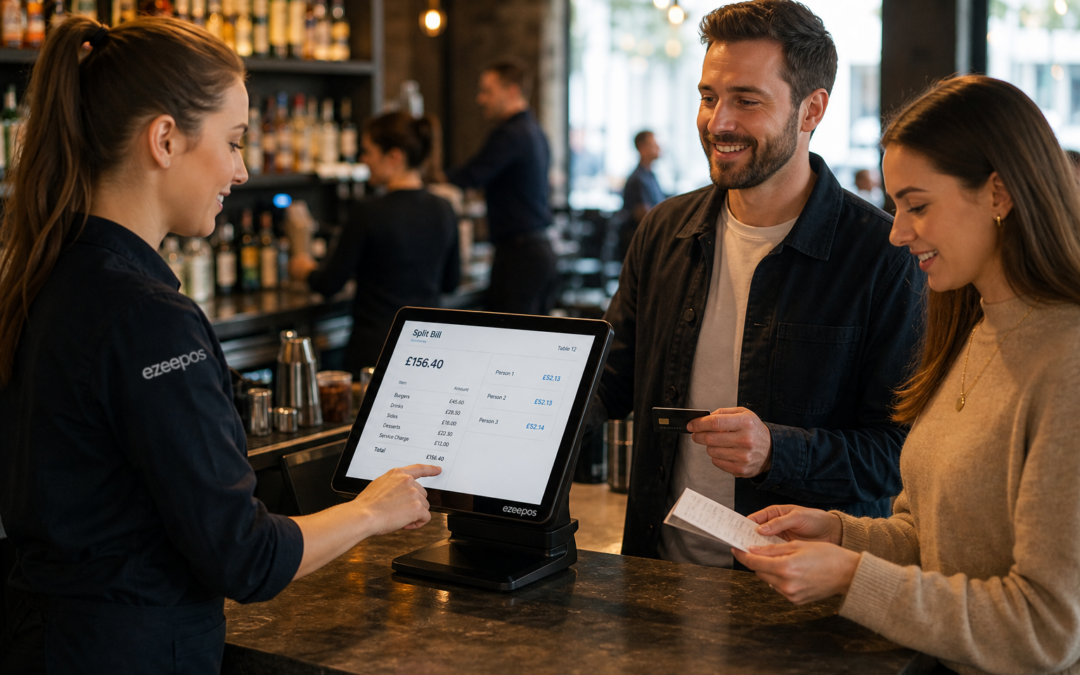
Why split bills matter in busy hospitality venues
Split bills are one of those everyday service tasks that can slow things down if the till system is awkward to use. In restaurants, bars and pubs, guests often want to pay separately by item, by table section or by equal share. If staff have to work this out manually, it can lead to delays, mistakes and extra pressure at the busiest times.
For UK hospitality businesses, a practical EPOS setup can make split billing much easier to manage. It helps front-of-house teams stay organised, reduces confusion at the end of a meal and gives customers a smoother experience when it is time to pay. If you are reviewing your current setup, eZeePOS is one UK option worth considering for restaurants, bars and other hospitality businesses that need a more efficient till workflow.
What causes split bill problems at the till?
Split bills can become frustrating when a system is not designed for them. Common issues include:
- staff needing to recalculate totals by hand
- items being divided awkwardly between guests
- mistakes when applying service charges or discounts
- queues building up while one table is being settled
- customers changing their minds about how they want to pay
Even when the amounts are small, the time spent sorting them out can affect the flow of service. That matters in pubs, restaurants and bars, where tables may turn over quickly and staff need to keep everything moving.
How EPOS can simplify split bill handling
A modern EPOS system can make split bills much more manageable by keeping the transaction clear from start to finish. Instead of starting again at a separate payment point or calculating each person’s share on paper, staff can work from the original table order and divide it in a way that suits the group.
1. Keep the original bill organised
Good EPOS software keeps every item linked to the right table and order. That means staff can see exactly what has been ordered before splitting it. When guests ask to pay separately, the till can help reduce the chance of items being missed or duplicated.
2. Split by item or by portion
Different tables prefer different ways of paying. Some groups want each guest to pay for their own meal, while others want to divide the full bill evenly. A flexible EPOS workflow makes those choices easier to manage without creating extra work for the team.
3. Apply discounts and charges more clearly
If a venue adds service charges or runs promotions, split bills can become more complicated. EPOS helps staff keep the total visible and apply adjustments more consistently, rather than trying to remember how to divide everything manually.
Why split bills affect service speed
Split bills are not just a payment issue. They have a direct effect on service speed. When a team is dealing with a large group at the end of a busy lunch or evening service, a slow payment process can hold up the table and create a queue at the till.
That can be particularly noticeable in venues where one member of staff is dealing with multiple tables at once. A clear EPOS process helps them move through the payment stage faster, which means less waiting for guests and less stress for staff.
For examples of how a well-planned till setup can improve day-to-day service, you can read more about hospitality EPOS workflows and how they support busy front-of-house teams.
Making life easier for staff
Split bill handling is often easier when the system is simple enough for new staff to learn quickly. In restaurants and bars with regular turnover or seasonal hiring, that becomes even more important. Staff should not need to memorise a complicated process just to divide a table’s bill.
Useful practical benefits include
- fewer mistakes when guests ask for separate payments
- less time spent correcting totals
- better confidence for new starters
- more consistent service at busy times
- less pressure on the person covering the till
A straightforward process can also help managers train staff more effectively. When the team knows how split bills work from the start, service tends to feel more organised and less rushed.
When payment integrations can help
Some restaurants and bars also want their EPOS and card payment setup to work together more smoothly during busy service. That can be especially useful when handling multiple payments on the same table. Depending on how a business operates, payment integration options such as Teya and Dojo Payments may be worth discussing with YCR Distribution as part of a wider EPOS review.
The key point is not to overcomplicate the setup. The aim is simply to make it easier for staff to match the bill with the payment taken, reduce manual entry and keep the end-of-meal process moving cleanly.
Choosing EPOS with split bills in mind
If split bills are a regular part of your service, it makes sense to choose software that handles them naturally. A good hospitality EPOS should support the way your team actually works, rather than forcing them into a rigid process.
When reviewing options, think about:
- how often guests ask for separate bills
- whether your team needs to split by item or by guest
- how busy your venue gets at peak times
- how easy the till is for new staff to use
- whether the payment process is clear and consistent
That approach can save time on the floor, reduce frustration at the end of service and make the customer experience feel more polished overall.
A practical next step for UK venues
Split bills are a small part of hospitality, but they can have a big effect on how smoothly service finishes. With the right EPOS setup, restaurants and bars can handle them faster, with less manual work and fewer errors.
If you are looking for a practical UK EPOS solution for your venue, visit www.ezeepos.co.uk to explore how eZeePOS could fit your business. Contact YCR Distribution at sales@ezeepos.co.uk or call 01924 438238.
Recent Comments