
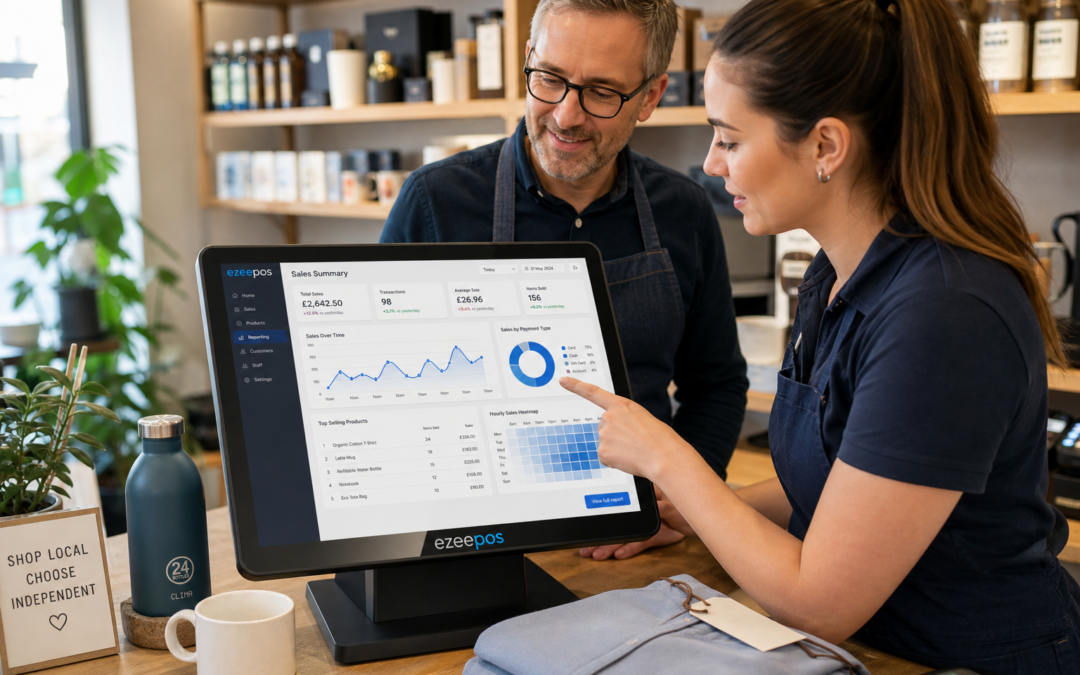
Good reporting is one of the most practical features in a modern EPOS system. For independent shops, it can turn everyday sales data into a clearer view of what is happening on the shop floor, without adding more paperwork to the end of the day.
If you are reviewing your current setup or looking at options on www.ezeepos.co.uk, it is worth thinking beyond basic takings totals. The right reports can help you understand which products are performing well, when customers are busiest and where your business may need a little more attention.
Why reporting matters in a busy independent shop
Independent retailers often work with limited time and tight margins. That makes clear reporting especially valuable. Instead of relying on memory or rough estimates, you can use your EPOS data to see recent trading patterns in a straightforward way.
This is useful whether you run a convenience store, gift shop, pet shop, hardware store or another neighbourhood business. A good report can show practical trends that support better day-to-day decisions, such as:
- which items are selling steadily rather than just occasionally
- which days or times are busiest
- how trade changes during different parts of the week
- which departments are contributing most to turnover
- where you may need to adjust staffing or promotions
Looking beyond the end-of-day total
A simple cash-up figure tells you how much was taken. It does not always explain why trade was stronger or weaker than expected. That is where EPOS reporting becomes far more useful.
With the right reports, you can spot patterns across days, weeks and months. For example, a shop may find that mornings are consistently stronger than late afternoons, or that certain categories perform better on specific days. That information can help with rotas, displays and stock replenishment planning.
Useful report views for independent retailers
Different businesses will want different information, but some of the most useful report types include:
- sales by day and by time
- best-selling products or departments
- transaction totals for selected periods
- staff performance summaries where relevant
- tax and till summaries for end-of-day checks
The aim is not to drown the owner in figures. It is to provide enough information to make sensible decisions quickly and confidently.
How reporting can help with staffing and opening hours
For many independent shops, staffing is one of the biggest ongoing costs. EPOS reporting can make it easier to match staff cover to real trading patterns rather than guesswork.
If your reports show that footfall is strongest around lunchtime or during the school run, you can make better decisions about when to have extra cover at the tills. If certain quieter periods are consistent, you may be able to use that time more effectively for merchandising, replenishment or counter work.
The same applies to opening hours. Over time, reporting can show whether the earliest or latest trading periods are worth maintaining as they are, or whether there is room to adjust around customer demand.
Using sales trends to improve displays and promotions
Retail reporting is also useful when planning product placement and promotions. If certain lines are regularly strong sellers, it may make sense to place them in more visible locations or pair them with related products. If some categories are underperforming, you can test a different display, bundle or offer.
This is especially helpful in shops with seasonal demand, where trading can change quickly. You can use EPOS reports to review what sold well last season, which promotions actually moved stock and where similar opportunities might exist this year.
That kind of practical review is often more reliable than relying only on instinct.
Making the end of the day quicker and clearer
Reporting is not just about business planning. It can also make closing up easier. When takings are recorded clearly through the till, end-of-day checks can be more structured and less stressful.
For busy retailers, that means less time spent manually adding figures together and less uncertainty when comparing sales records. A clear EPOS system can help owners and managers feel more in control of the numbers before they head home.
Choosing reports that suit your business
Not every shop needs the same level of detail. A small independent retailer may only need a few straightforward views, while a larger multi-department shop may want more detailed breakdowns. The key is choosing a system that gives you useful information without slowing the business down.
With eZeePOS, UK businesses can look for a practical reporting setup that supports day-to-day trading and gives owners a better understanding of what is happening across the shop. If you want to see how that fits into a wider retail EPOS setup, you can explore the options at eZeePOS.
Keeping reporting simple enough to use
Good reporting should be easy to access and easy to understand. If a report is too complicated, it is unlikely to be used regularly. The most useful EPOS reports are the ones that fit naturally into a routine, such as a daily review, weekly check or monthly planning session.
That is why it helps to choose a POS system that presents information clearly and gives you the flexibility to focus on what matters most to your business. For many independent retailers, that means quick answers to everyday questions rather than long spreadsheets.
A practical tool for better retail decisions
EPOS reporting is not about replacing experience. It is about backing up that experience with clearer information. When a shop owner can see what is selling, when customers are shopping and where trade is changing, it becomes easier to act early and make calmer decisions.
For independent retailers, that can make a real difference to planning, staffing and overall control. It is one of the simplest ways to get more value from an EPOS system without adding extra complexity.
To learn more about practical EPOS software for UK retail businesses, visit www.ezeepos.co.uk. Contact YCR Distribution at sales@ezeepos.co.uk or call 01924 438238.
Recent Comments