
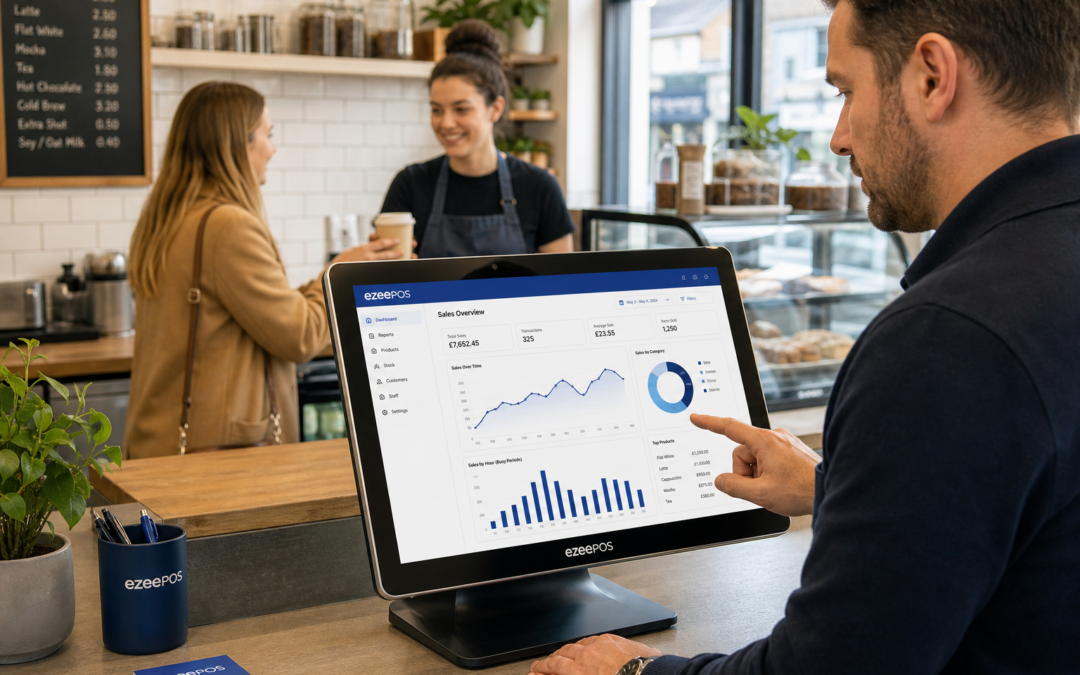
Good reporting is one of the most useful parts of any modern till system, yet it is often overlooked. For independent shops, cafes, restaurants, bars and takeaways, EPOS reports can turn everyday sales data into practical information that helps you understand what is happening in the business.
If you are looking for a UK EPOS solution that keeps reporting easy to access and easy to use, eZeePOS is designed to support day-to-day trading as well as longer-term business decisions. You can learn more at www.ezeepos.co.uk.
Why sales patterns matter
Many business owners have a general sense of what is busy and what sells well, but reports give you a clearer picture. Instead of relying on memory, you can check real figures and make decisions based on actual trading data.
That matters because sales patterns can help you understand:
- which products or menu items sell most often
- which times of day are busiest
- which days of the week bring in the strongest trade
- whether promotions are working
- whether staffing levels match demand
For a busy independent business, even small improvements in these areas can make service feel smoother and planning much easier.
What EPOS reporting can show you
A good EPOS system can produce more than one type of report. The aim is not to drown the owner in spreadsheets, but to give a clear view of what is happening in the business.
Best-selling products and categories
Product and category reports help you spot what customers buy most often. In retail, that may mean seeing which lines are consistently popular. In hospitality, it could mean identifying menu items that perform well throughout the week.
This is useful because it can highlight the items that deserve more attention, whether that means better menu placement, more prominent display space or simply knowing what customers already enjoy.
Busiest trading periods
Time-based reports are often some of the most valuable. They show when trade peaks during the day so you can plan staffing, breaks and preparation more sensibly.
For example, a cafe may find that the morning rush is much stronger than the afternoon trade, while a takeaway may see a sudden spike on Friday evenings. With that information, you can plan more calmly instead of guessing from one day to the next.
Daily and weekly performance
Short-term reporting helps you compare performance across days and weeks. That can be especially helpful if you want to check whether a change is having the right effect, such as a new promotion, a revised menu or a different staffing pattern.
Rather than waiting until month end, you can keep an eye on progress as you go.
How reporting supports better decisions
EPOS reporting is most useful when it leads to action. It should help you make simple, practical decisions without adding more admin to your day.
Staffing and rota planning
If your reports show repeat busy periods, you can schedule staff more effectively. That can reduce pressure on the counter, improve service and help the business feel more organised during peak times.
Stock and menu planning
While reporting is not the same as stock control, it can still help you plan what to keep available. If certain items are consistently popular, you are in a better position to keep the right products ready for customers.
In hospitality, this can also help when planning specials or seasonal menus. You can use previous sales trends to see what customers tend to choose and avoid overcomplicating the offer.
Promotions and offers
Reports can also show whether a promotion is doing what you expected. If an offer increases sales but only on certain days, you may need to adjust when or how it is used. If it does not move the needle at all, you can reconsider it before it becomes a drain on margin.
Reporting in retail and hospitality
Different business types use reporting in different ways, but the basic value is the same: clearer trading information.
For retail shops
Retailers often use sales reports to identify popular items, understand busy trading windows and check how different categories perform. This can be especially useful for shops with changing seasonal demand or a wide mix of products.
For cafes, restaurants and takeaways
Hospitality businesses often use reports to understand customer flow, menu popularity and peak service times. That makes it easier to organise prep, manage team cover and keep service moving during busy spells.
For fast-moving environments, knowing what happens at different times of day can be just as valuable as knowing what sold well overall.
Making reporting part of the daily routine
Reporting only helps if it is reviewed regularly. A simple habit can make a big difference.
- Check daily sales at the end of service
- Review weekly patterns to spot trends
- Use monthly reports to compare trading periods
- Look for changes after promotions or menu updates
- Share useful data with managers or senior staff
You do not need to study every figure in detail. The aim is to find the numbers that help you make a better decision quickly.
How eZeePOS can help
With eZeePOS, reporting is part of a practical EPOS setup for UK businesses that want better visibility without unnecessary complexity. Whether you run a retail shop, cafe, restaurant or takeaway, having clear sales information in one place can help you stay organised and respond to trade more confidently.
If your current setup makes reporting difficult, slow or unclear, it may be time to look at a more modern approach. A better view of your sales can help you spot patterns earlier and manage the business with more confidence.
Contact YCR Distribution at sales@ezeepos.co.uk or call 01924 438238.
Visit www.ezeepos.co.uk to find out more about eZeePOS for UK retail and hospitality businesses.
Recent Comments